
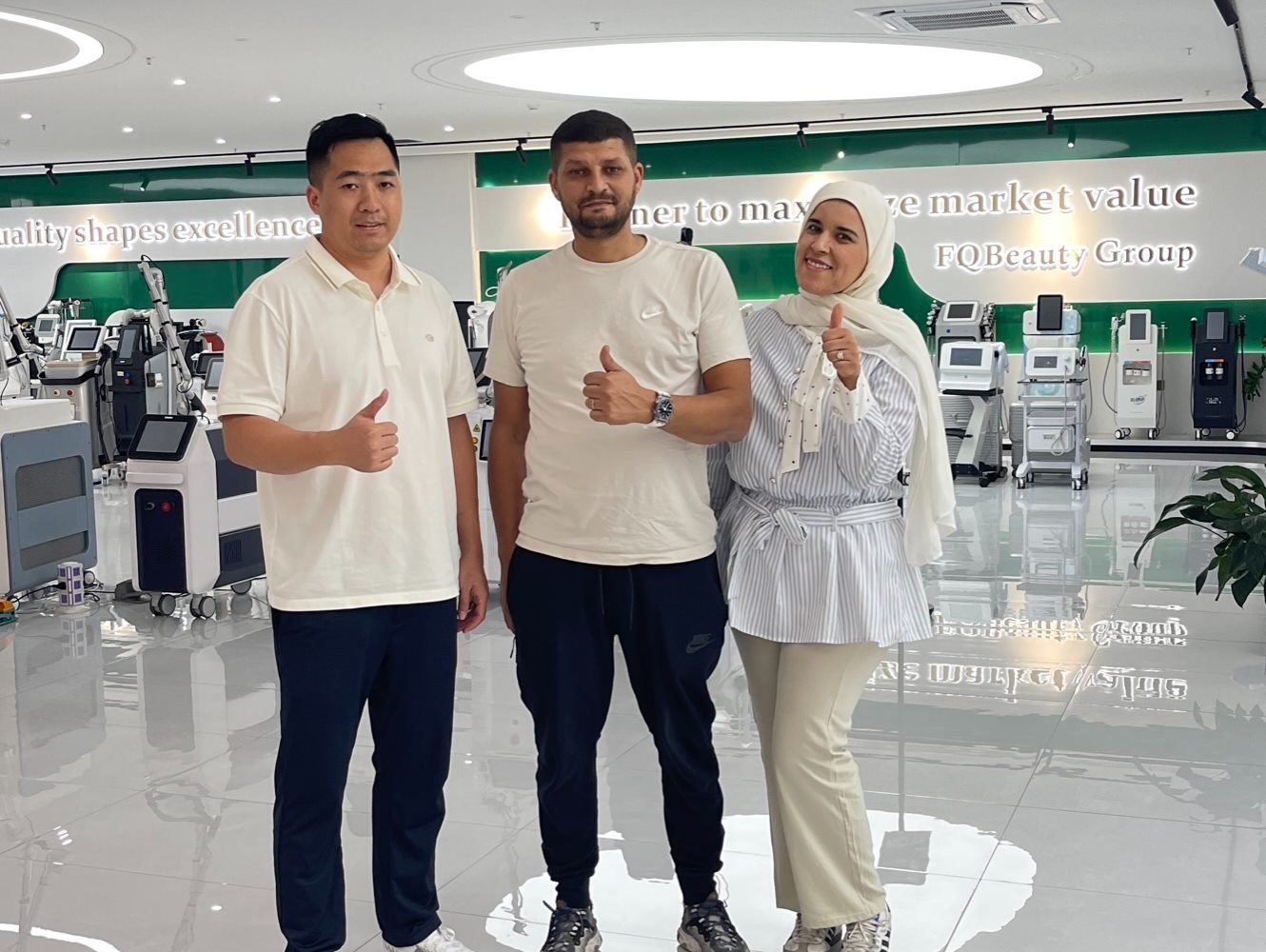
A factory visit helps a client move from broad ideas to useful questions: which base model fits the market, what can be branded, what needs engineering confirmation and what must be written into the quotation. It is evidence and conversation—not a substitute for model-specific order documents.
1. A welcome with context, not a sales script
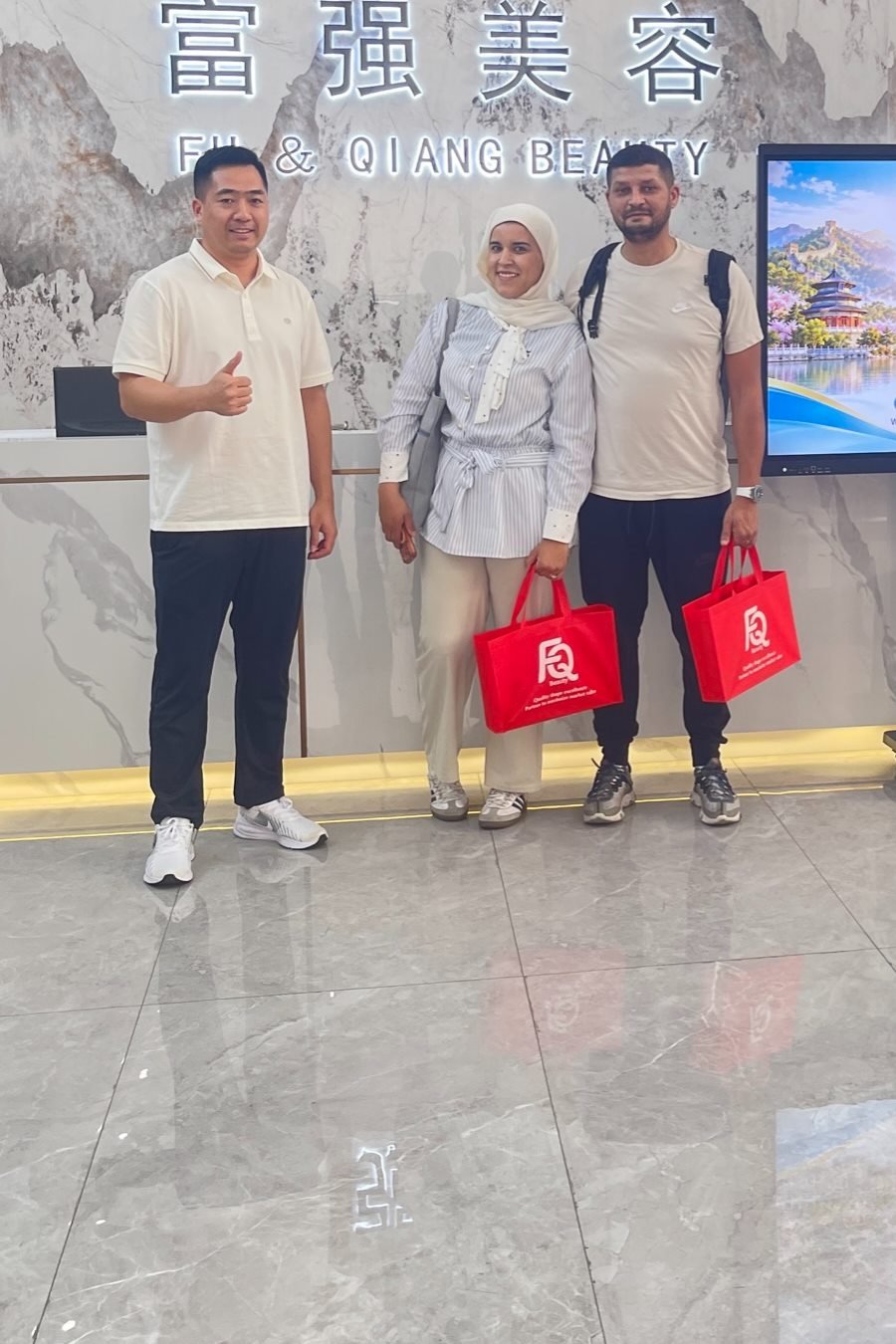
The visit began in the reception area before the showroom walk-through. Meeting clients face to face changes the quality of a supplier conversation: a client can see how a factory presents itself, ask direct questions and put the later photos, videos and quotations into a real setting.
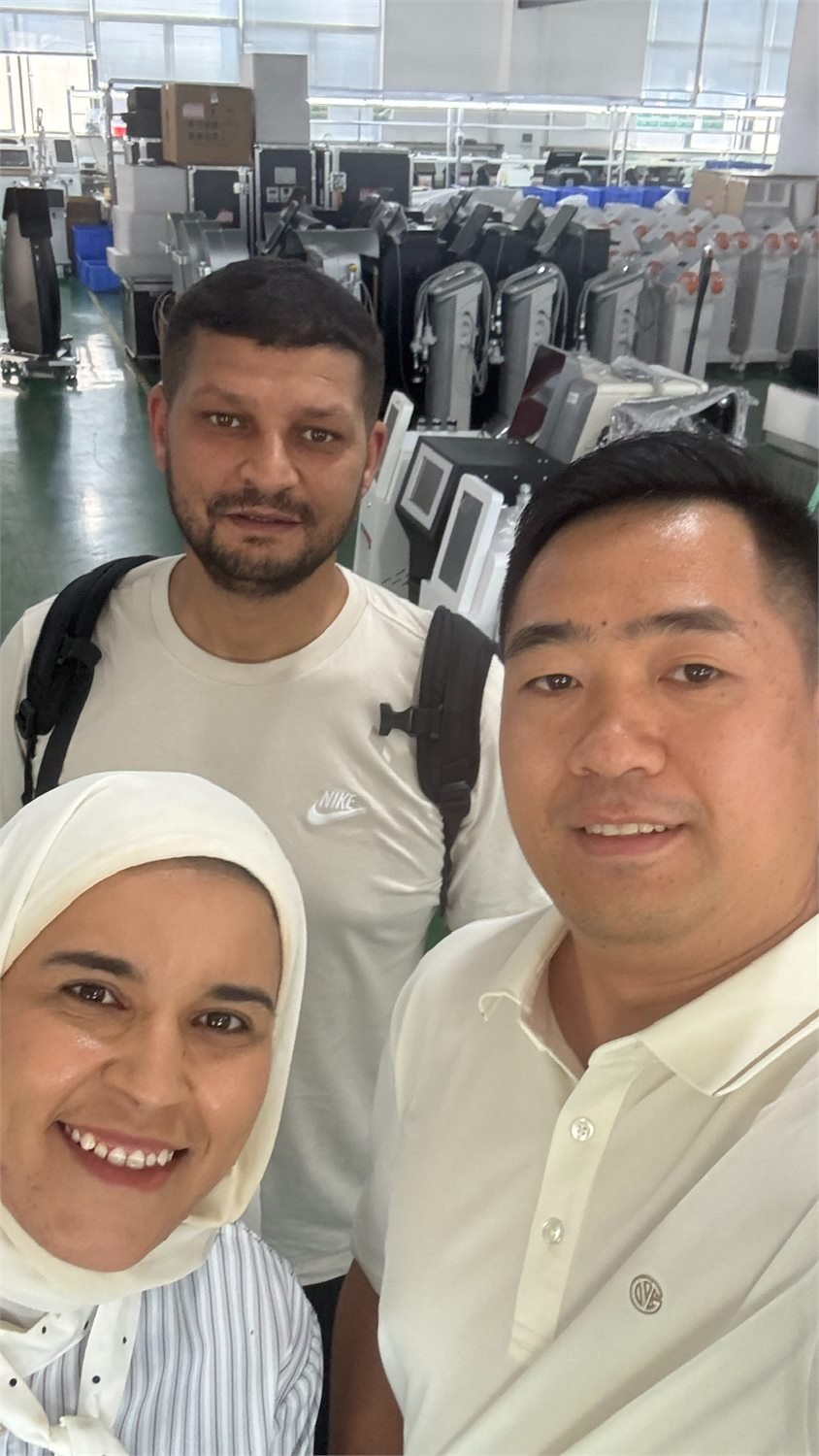
We are keeping the visitors’ identities private. What matters for other distributors is the process: an overseas team came to the factory, spent time with the FQBeauty team and used the visit to explore an OEM beauty equipment project in person.
2. The useful part is the conversation behind the order
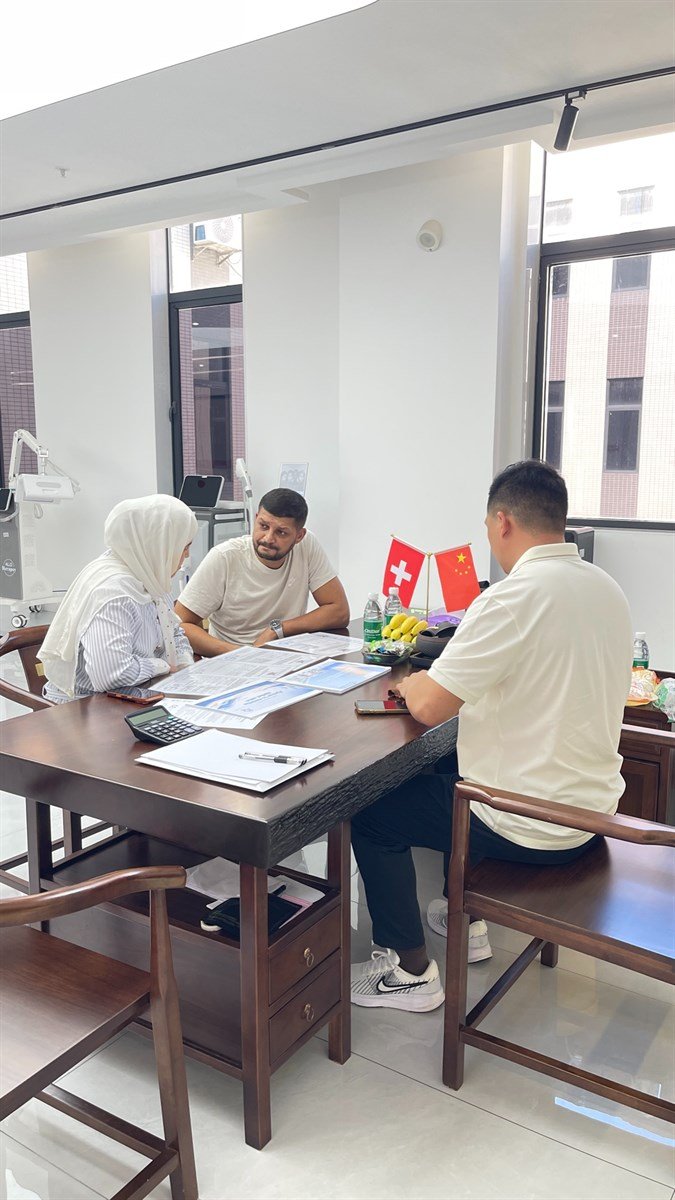
At the meeting table, the discussion moved away from generic product claims and toward the choices that make an OEM project workable. Which product category suits the planned market? Is the request about a logo, a housing color, a startup screen, a manual or a broader appearance direction? Which questions need to be checked against a specific model?
Those distinctions save time. A good meeting does not pretend that every visual reference will fit every machine. It separates the confirmed base product from the items that need a drawing, compatibility check, quantity discussion or written commercial confirmation.
3. Comparing actual machines makes OEM questions more concrete
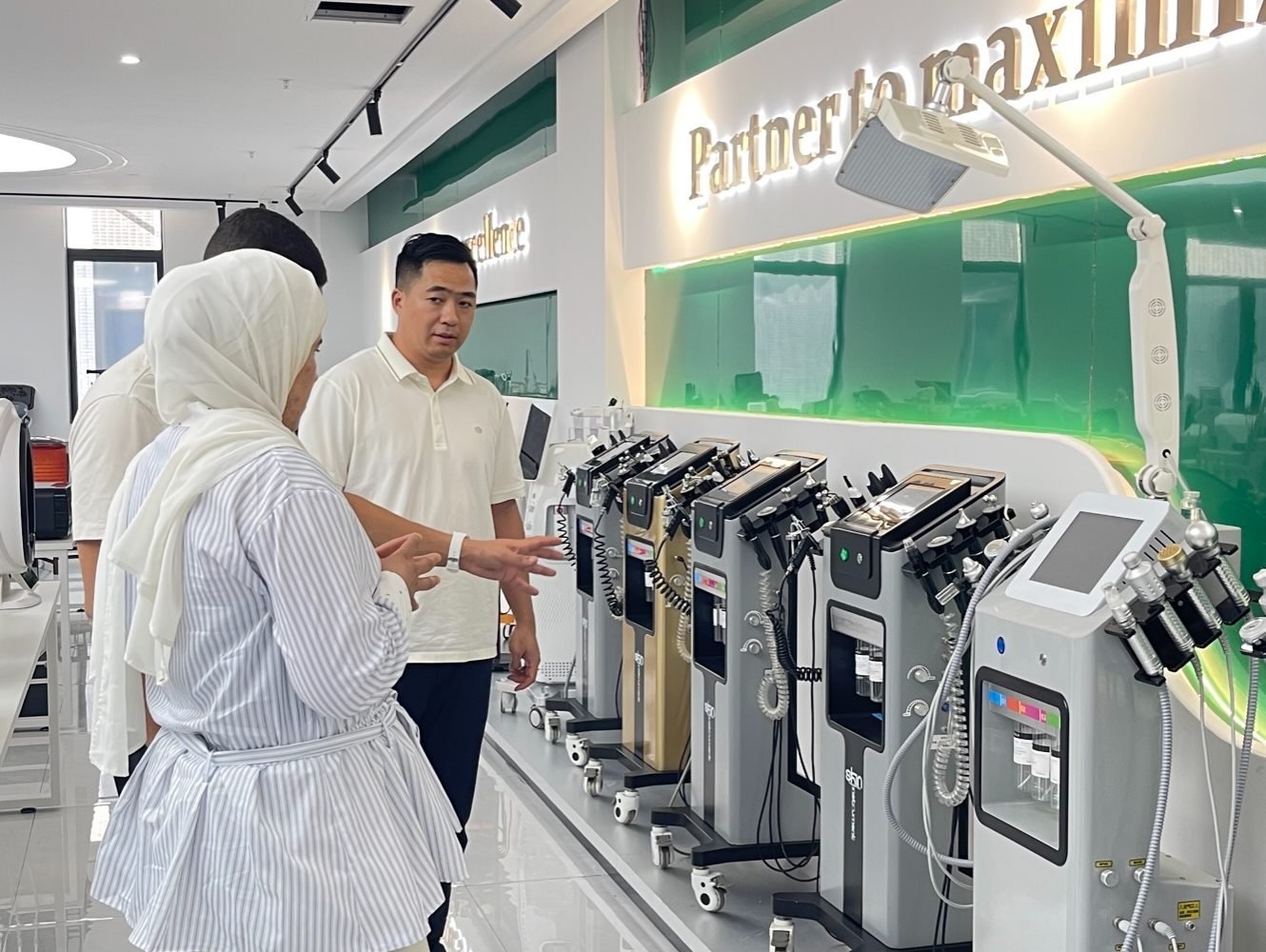
In the showroom, a client can compare cabinet formats, control layouts, working heads and the overall presentation of different product categories. That is often more useful than selecting from a product thumbnail alone. It also gives both sides a better reference point when they later discuss logo placement, color, screen language or included accessories.
The machines on display are examples for review, not a promise that every configuration is available for every model. For an OEM inquiry, the next step is to name the product, market, quantity and intended branding, then ask FQBeauty to confirm the available scope for that machine.
4. Looking beyond the showroom
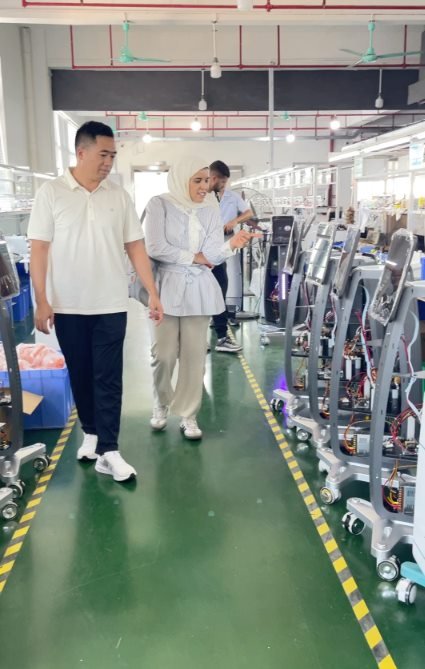
The production-floor walk-through gave the visitors another part of the picture: equipment at different stages of assembly and preparation. For a distributor, this is where a factory visit becomes more than a display-room experience. It is an opportunity to ask how the selected product moves from components and assembly to final checks, packing and technical support.
A single visit cannot replace an inspection plan or a written quality requirement. It can, however, help the client identify what to request next: product photos, a model-specific configuration list, testing evidence, packing details and the support path after delivery.
5. Leaving with a working brief is more valuable than leaving with a brochure
The strongest outcome of a visit is not a vague promise. It is a short, usable list of what the client wants checked next. For this conversation, the visual evidence and in-person discussion helped turn a general OEM idea into questions that can be answered against a specific beauty equipment model.
That approach applies whether a client visits in person or starts remotely. The FQBeauty OEM/ODM page, the factory overview and our private-label planning guide provide the next references. When you are ready to discuss one product, send the model, country, quantity and brand requirements through the FQBeauty inquiry form.
Frequently asked questions
What should a client bring to an OEM factory visit?
Bring the product category or exact model you want to discuss, your target market, estimated quantity, visual references, preferred language and a list of non-negotiable requirements. This gives the factory a practical starting point and makes it easier to identify what needs a model-specific quotation.
Can OEM details be finalized during a factory visit?
A visit can clarify the base model, showroom comparison, possible logo locations, visual direction and the questions that need follow-up. The final configuration, compatibility, quantity, artwork, fees, lead time and commercial terms must still be confirmed in the model-specific quotation and order documents.
Do I need to travel to China before starting an OEM project?
No. A visit is useful when possible, but a client can begin by sharing the model, country, quantity and branding requirements with FQBeauty. A WhatsApp video factory tour can be booked at least 24 hours in advance for a guided remote conversation.